An easy to use alternative to ChannelGet. More...
#include <pv/pvaClient.h>
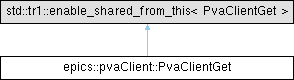
Public Member Functions | |
| POINTER_DEFINITIONS (PvaClientGet) | |
| ~PvaClientGet () | |
| Destructor. | |
| void | setRequester (PvaClientGetRequesterPtr const &pvaClientGetRequester) |
| Set a user callback. | |
| void | connect () |
| Call issueConnect and then waitConnect. | |
| void | issueConnect () |
| create the channelGet connection to the channel. | |
| epics::pvData::Status | waitConnect () |
| Wait until the channelGet connection to the channel is complete. | |
| void | get () |
| Call issueGet and then waitGet. An exception is thrown if get fails. | |
| void | issueGet () |
| Issue a get and return immediately. | |
| epics::pvData::Status | waitGet () |
| Wait until get completes. | |
| PvaClientGetDataPtr | getData () |
| Get the data/. | |
| PvaClientChannelPtr | getPvaClientChannel () |
| Get the PvaClientChannel;. | |
Static Public Member Functions | |
| static PvaClientGetPtr | create (PvaClientPtr const &pvaClient, PvaClientChannelPtr const &pvaClientChannel, epics::pvData::PVStructurePtr const &pvRequest) |
| Create a PvaClientGet. | |
Friends | |
| class | ChannelGetRequesterImpl |
Detailed Description
An easy to use alternative to ChannelGet.
Definition at line 993 of file pvaClient.h.
Constructor & Destructor Documentation
◆ ~PvaClientGet()
| epics::pvaClient::PvaClientGet::~PvaClientGet | ( | ) |
Destructor.
Definition at line 106 of file pvaClientGet.cpp.
References epics::pvaClient::PvaClient::getDebug().
Member Function Documentation
◆ connect()
| void epics::pvaClient::PvaClientGet::connect | ( | ) |
Call issueConnect and then waitConnect.
An exception is thrown if connect fails.
- Exceptions
-
runtime_error if failure.
Definition at line 202 of file pvaClientGet.cpp.
References epics::pvaClient::PvaClient::getDebug(), issueConnect(), and waitConnect().
Referenced by issueGet().
◆ create()
|
static |
Create a PvaClientGet.
- Parameters
-
pvaClient Interface to PvaClient pvaClientChannel Interface to PvaClientChannel pvRequest The request structure.
- Returns
- The interface to the PvaClientGet.
Definition at line 73 of file pvaClientGet.cpp.
References ChannelGetRequesterImpl, and epics::pvaClient::PvaClient::getDebug().
◆ get()
| void epics::pvaClient::PvaClientGet::get | ( | ) |
Call issueGet and then waitGet. An exception is thrown if get fails.
Definition at line 242 of file pvaClientGet.cpp.
References epics::pvaClient::PvaClient::getDebug(), issueGet(), and waitGet().
Referenced by getData().
◆ getData()
| PvaClientGetDataPtr epics::pvaClient::PvaClientGet::getData | ( | ) |
Get the data/.
- Returns
- The interface.
Definition at line 281 of file pvaClientGet.cpp.
References get(), and epics::pvaClient::PvaClient::getDebug().
◆ getPvaClientChannel()
| PvaClientChannelPtr epics::pvaClient::PvaClientGet::getPvaClientChannel | ( | ) |
◆ issueConnect()
| void epics::pvaClient::PvaClientGet::issueConnect | ( | ) |
create the channelGet connection to the channel.
This can only be called once.
Definition at line 216 of file pvaClientGet.cpp.
References epics::pvaClient::PvaClient::getDebug().
Referenced by connect().
◆ issueGet()
| void epics::pvaClient::PvaClientGet::issueGet | ( | ) |
Issue a get and return immediately.
Definition at line 256 of file pvaClientGet.cpp.
References connect(), and epics::pvaClient::PvaClient::getDebug().
Referenced by get().
◆ POINTER_DEFINITIONS()
| epics::pvaClient::PvaClientGet::POINTER_DEFINITIONS | ( | PvaClientGet | ) |
◆ setRequester()
| void epics::pvaClient::PvaClientGet::setRequester | ( | PvaClientGetRequesterPtr const & | pvaClientGetRequester | ) |
Set a user callback.
- Parameters
-
pvaClientGetRequester The requester which must be implemented by the caller.
Definition at line 292 of file pvaClientGet.cpp.
References epics::pvaClient::PvaClient::getDebug().
◆ waitConnect()
| Status epics::pvaClient::PvaClientGet::waitConnect | ( | ) |
Wait until the channelGet connection to the channel is complete.
- Returns
- status;
Definition at line 232 of file pvaClientGet.cpp.
References epics::pvaClient::PvaClient::getDebug().
Referenced by connect().
◆ waitGet()
| Status epics::pvaClient::PvaClientGet::waitGet | ( | ) |
Wait until get completes.
- Returns
- status;
Definition at line 272 of file pvaClientGet.cpp.
References epics::pvaClient::PvaClient::getDebug().
Referenced by get().
Friends And Related Symbol Documentation
◆ ChannelGetRequesterImpl
|
friend |
Definition at line 1095 of file pvaClient.h.
Referenced by create().
The documentation for this class was generated from the following files:
Generated on Mon Dec 15 2025 15:31:16 for pvaClientCPP by
 1.12.0